More Than Awareness: Building a Mental Health Safety Net
She had run away from home, but she still came to school.
Home had become unpredictable. Her emotions were heavy, her mental health was fragile, and she did not know where she would sleep next. Yet she knew where she wanted to be that morning.
At school.
She came because our building felt safe. She knew there would be adults who noticed when she walked through the door, food if she was hungry, and space to breathe before anyone asked her to explain. She knew she would be welcomed before she was questioned.
For this student, school was more than a place to earn credits. It was the safest address she knew.
Her story is why BIPOC Mental Health Awareness Month must be about more than awareness. It must be about building places where young people feel protected, understood, connected, and worthy of care.
Discipline Is Also a Mental Health Issue
Too often, students experiencing trauma communicate their pain through behavior before they have the language to describe it.
They may shut down, walk out, yell, refuse, fight, or disappear. In traditional school environments, those behaviors can quickly lead to suspension, expulsion, police involvement, or placement in increasingly restrictive settings.
The student is removed, but the pain remains.
National data confirms that school discipline cannot be separated from student well-being. Black students are more likely than White and Hispanic students to report experiencing unfair discipline. Among students who reported unfair discipline, approximately half experienced persistent sadness or hopelessness, roughly one-fourth to one-third seriously considered suicide, and more than one in ten attempted suicide.
Exclusion may remove a student from a classroom, but it can also remove them from trusted adults, daily routines, meals, counseling, friendships, and the one environment where they feel seen.
That is not simply a disciplinary consequence. It can become a mental health crisis.
The Numbers Are Sounding an Alarm
The crisis is especially urgent in our own community.
The Cook County Department of Public Health reports that Black high school students in suburban Cook County attempted suicide at three times the rate of their peers. Between 2018 and 2023, the suicide death rate among Black residents more than doubled. During the same period, the rate among Hispanic residents nearly doubled.
Nationally, Hispanic students also reported a higher prevalence of suicide attempts than White students in the 2023 Youth Risk Behavior Survey. Researchers have found that Black and Latino Chicagoans are dying by suicide at younger ages than Whites.
These numbers are not abstract.
They are the student sitting silently in the back of the classroom. The teenager who has stopped turning in assignments. The young person whose anger is easier to notice than their despair. The family forced to choose between paying a bill and paying for therapy.
They are also a call for schools, mental health providers, families, mentors, and donors to work together.
Restorative Practices Create a Different Doorway
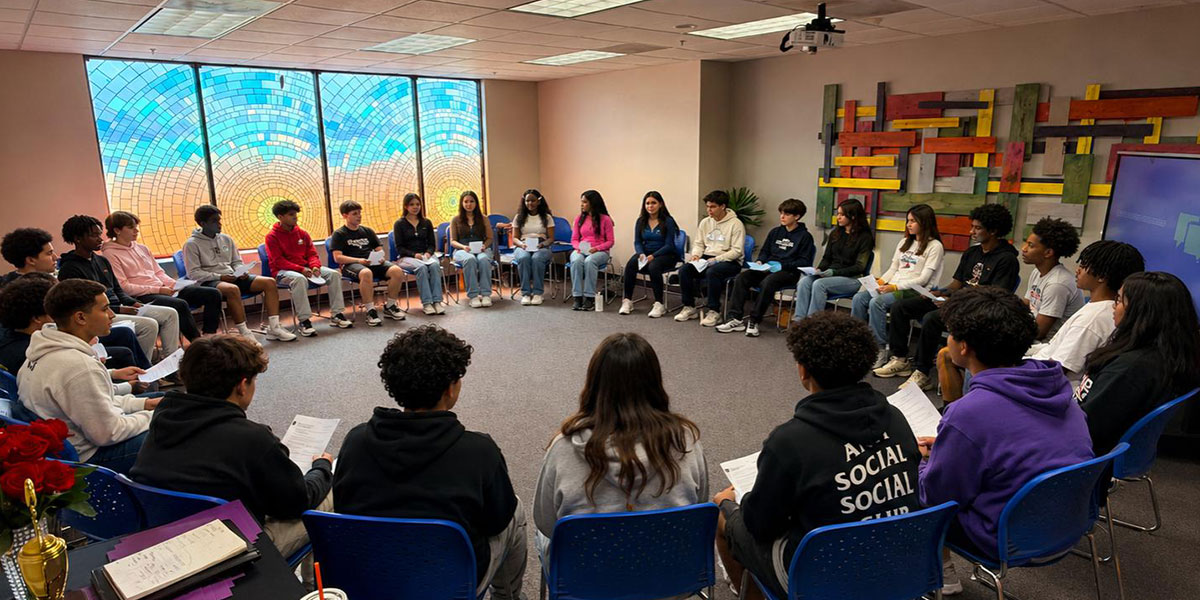
This month, iCan Dream Center hosted a Restorative Practices Workshop in partnership with the Cook County Department of Public Health, with Sandy Hook Promise contributing a national perspective.
The workshop brought educators, clinicians, advocates, and community partners together to examine the connection between school discipline, student belonging, and mental health. We explored an essential question:
What changes when we stop asking only, “What rule was broken?” and begin asking, “What happened, who was harmed, and what is needed to repair the harm?”
Restorative practices do not eliminate accountability. They make accountability more meaningful.
Students are still expected to understand the impact of their choices, repair relationships, and make different decisions. But they are not reduced to the worst thing they did on the hardest day of their lives.
Cook County’s research identifies restorative practices as an evidence-based alternative to exclusionary discipline that can reduce suspensions and expulsions while improving mental health, social-emotional development, and overall school climate.
At iCan Dream Center, this approach is deeply personal. Many of our students arrive after being repeatedly removed, suspended, or rejected in previous educational settings. Some enter our doors already expecting us to give up on them.
We work to interrupt that expectation.
We build relationships before crises. We create opportunities for students to tell their stories. We help them name emotions, repair harm, practice new skills, and return to the community rather than being pushed farther outside of it.
We do not excuse harmful behavior. We refuse to confuse punishment with healing.
Belonging Can Be Protective
A positive school environment is not simply one where students follow the rules. It is one where students believe their presence matters.
CDC research found that strong school connectedness was associated with a lower prevalence of poor mental health, persistent sadness or hopelessness, suicidal thoughts, and suicide attempts. Safe and supportive schools can remain protective well beyond adolescence.
See how one of our teachers explains how her lived experience created a framework for the way she shows up for students. https://youtu.be/zif48nGLlDw
Belonging is not an extracurricular idea at iCan Dream Center. It is part of our mental health strategy.
It can look like a staff member noticing that a student has not eaten. A mentor consistently showing up. A restorative conversation after a conflict. A group where an emerging adult discovers that they are not alone. A teacher saying, “We are going to hold you accountable, and we are not going to abandon you.”
Sometimes the most therapeutic sentence a young person can hear is simply: You are still welcome here.
Care Must Continue Beyond the School Day
Schools cannot meet this crisis alone.
DreamWeavers, our behavioral health clinic, extends support to students, emerging adults, and families who need care beyond the school day. The clinic is designed to connect Medicaid-eligible individuals with culturally responsive behavioral health services without allowing financial hardship to become a locked door.
Culturally responsive care matters because trust matters. Young people and families need providers who understand how race, disability, poverty, community violence, family stress, and past experiences with institutions can shape mental health.
They need care that meets them with dignity, not judgment.
Through counseling, therapeutic groups, family support, case management, and community-based services, DreamWeavers helps build a stronger bridge between school, home, and mental health care.
Real Change Requires All of Us
No single school, clinic, practitioner, or program can reverse these trends alone. The solution is an ecosystem.
Public health partners bring research and resources. Restorative practitioners help schools transform their responses to conflict. Behavioral health professionals provide treatment. Mentors provide consistency. Families provide insight. Donors provide the flexible resources that allow organizations to respond before a challenge becomes a crisis.
You can become part of that ecosystem.
Become a mentor. A dependable adult can help a young person imagine a future beyond their current circumstances.
Refer someone who needs support. A student, emerging adult, or family may be waiting for someone to help them find the right doorway to care.
Become a monthly donor. Recurring gifts help sustain therapeutic groups, family supports, mentoring opportunities, community-based services, and environments where students can experience safety and belonging every day.
The student who ran away from home still found her way to school.
She came because she believed someone would open the door.
Together, we can make sure that door remains open, not only for her, but for every young person searching for a safe place to land, heal, and begin again.