Students Don’t Just Drop Out, They Disconnect First
What happens when the student yelling “I give up” is really asking, “Will you give up on me, too?”
Last week, if you were at iCan Dream Center during dismissal, you may have heard a student yelling loudly in the front corridor:
“I give up. F*** it. I’ll just drop out.”
The moment was loud. It was emotional. It was uncomfortable. It was also deeply human.
The student was being held accountable for a cell phone violation. From a distance, it may have sounded like defiance. But if you moved in a little closer, you would have heard something else.
Two male team members, standing near him with steady voices, almost whispered:
“We’ll never give up on you.”
That is restorative practice.
Not permissiveness. Not ignoring behavior. Not lowering expectations.
Restorative practice is accountability wrapped in relationship. It is the decision to hold the line without pushing the child out. It is the belief that a student can make a mistake and still belong. It is the discipline of staying close when a young person is testing whether rejection is coming next.
At iCan Dream Center, restorative practices are not a trend for us. They are part of our daily commitment to student dignity, mental health, and belonging.
More than half of our secondary students come to us after causing some type of harm in their home school environments. Many arrive already discouraged. Some come in guarded, disconnected, angry, anxious, or convinced that school is just another place where adults will eventually give up on them.
Our job is to interrupt that expectation.
As the CDC notes, restorative practices prioritize trust, belonging, accountability, and healing. That combination matters deeply in a therapeutic school setting because many of our students do not need another adult to prove that consequences exist. They need adults who can teach accountability without abandonment.
This is why our Youth Mental Health Conference was so critical for our students. The conference created space for young people to talk about mental health, belonging, prevention, relationships, stress, safety, and hope. For our students, mental health is not an abstract topic. It is connected to whether they feel seen at school, whether they can regulate after conflict, whether they believe they have a future, and whether they trust that support will still be there after a difficult moment.
Restorative practices help us move from the question, “What rule was broken?” to deeper questions: “What happened? Who was impacted? What support is needed? How do we repair and move forward?”
That is the work.
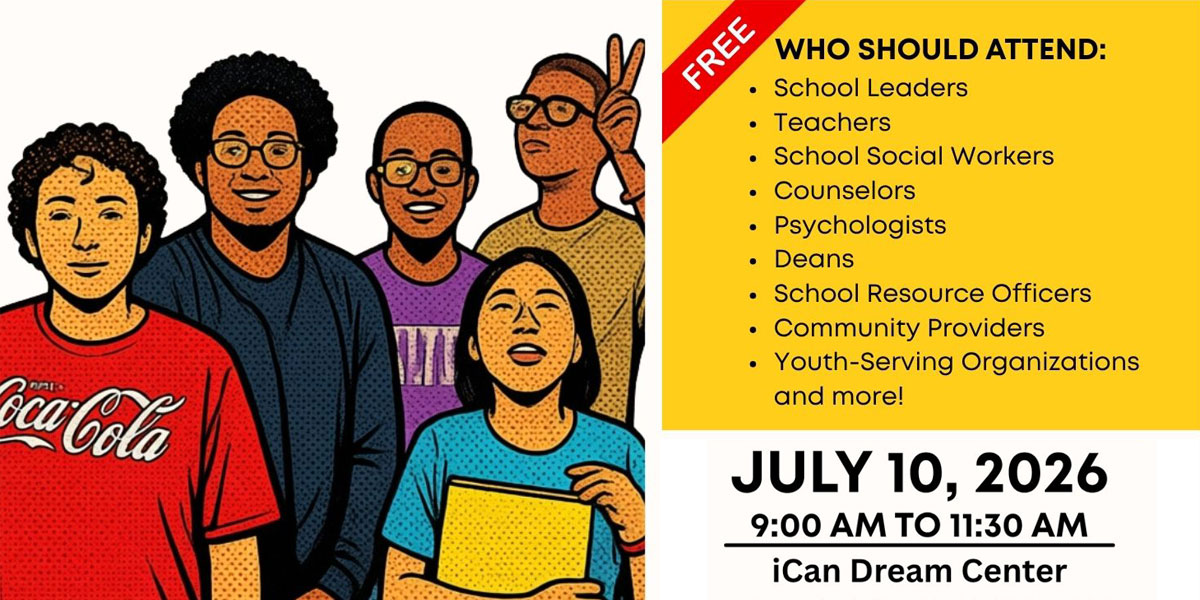
And that is why we are proud to host a cost-free Restorative Practices Workshop at iCan Dream Center, facilitated by the Cook County Department of Public Health. CCDPH recently released a new report examining restorative practices, exclusionary school discipline, student well-being, and the need for healthier, more supportive school environments. During this workshop, we will unpack the findings and discuss what they mean for students, schools, families, and communities.
We will also hear from representatives from Sandy Hook Promise, who will share a national perspective on prevention, safety, and belonging.
For students like ours, restorative practices are not just about school discipline. They are about mental health. They are about prevention. They are about repairing trust. They are about making sure that even in the hardest hallway moments, students hear the truth:
We will hold you accountable.
We will help you repair.
And we will never give up on you.
Learn More & Register Here